




The origin and history of steak go back a long way. Steak is a sliced meat, usually made from beef, and its preparation and consumption can be traced back to many centuries of tradition.
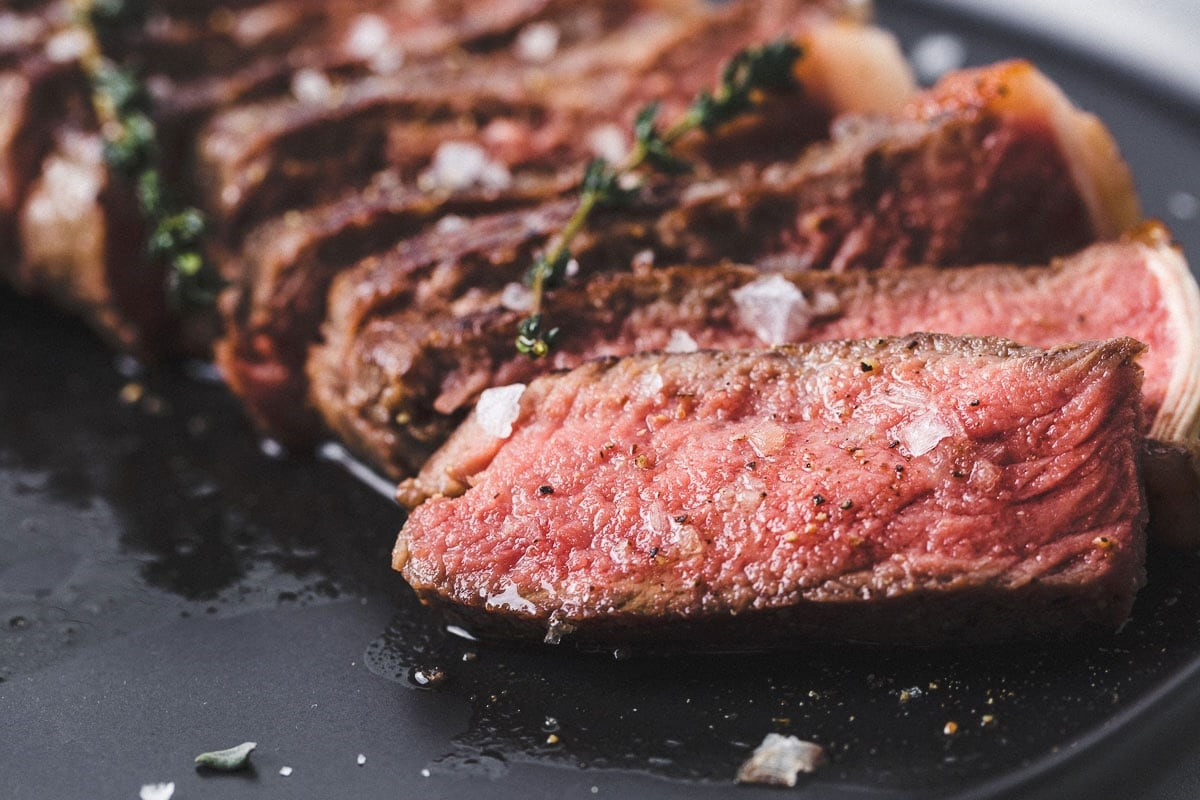
In the United States, the steakhouse culture began to spread in the mid-1800s, where steaks made from various types of beef were offered to guests. These steakhouses became famous and popular for the high quality of the meat and the various ways of seasoning and cooking the steaks.
There are even steak-making competitions. In these competitions, competitors prepare the meat on grills.

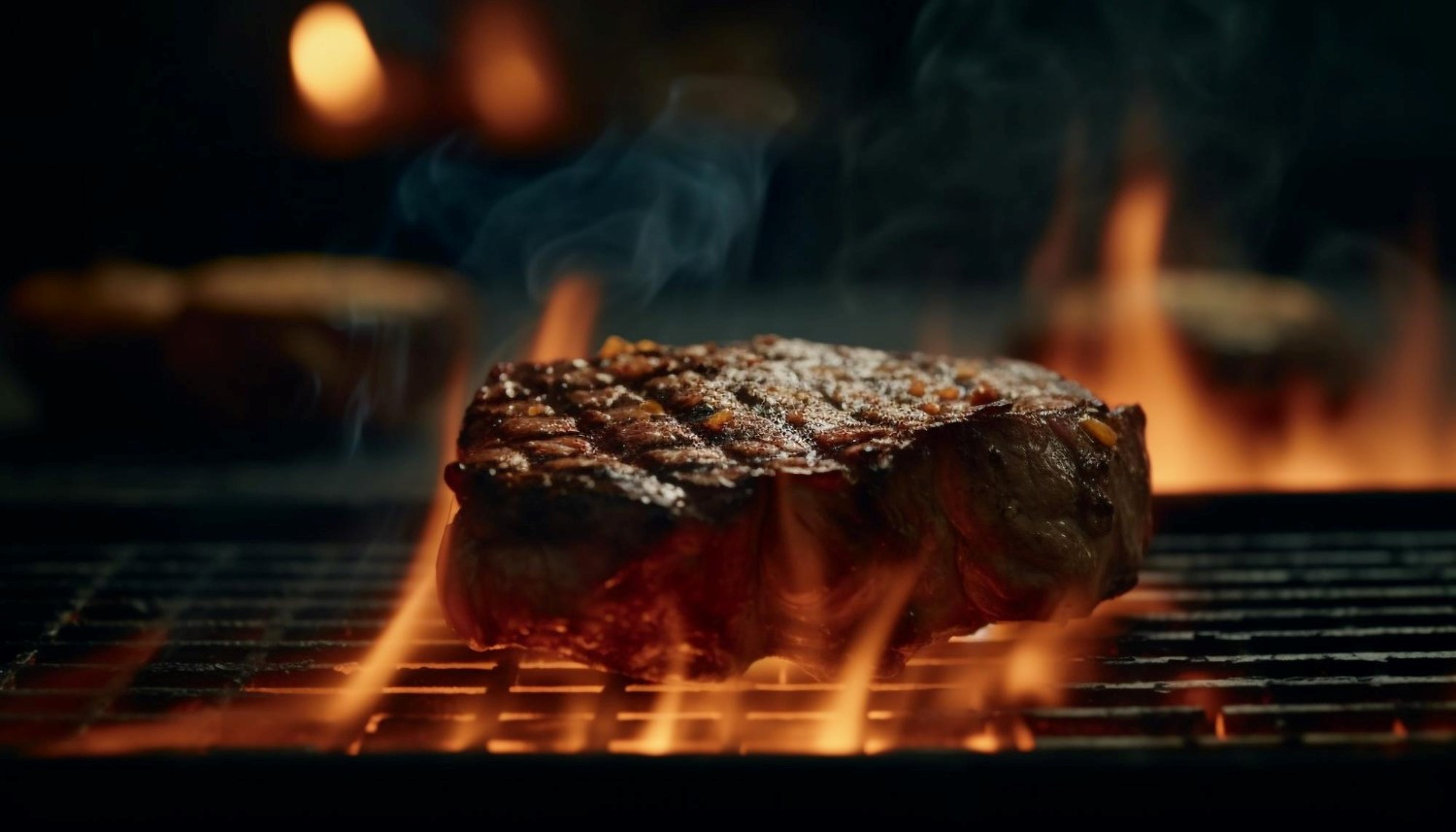
Although there are certain considerations to take into account when grilling steak, it can be easily done on either a gas or charcoal grill.
High temperatures are essential. Once a grill is properly heated, only then do we start cooking the meat. This way, the grill pattern will also be better visible on the steak. Cooking time depends mostly on the meat. The thickness and quality of the meat greatly affect the cooking time. Use a meat thermometer to ensure that you cook it to the perfect doneness.
The different doneness levels are listed below:
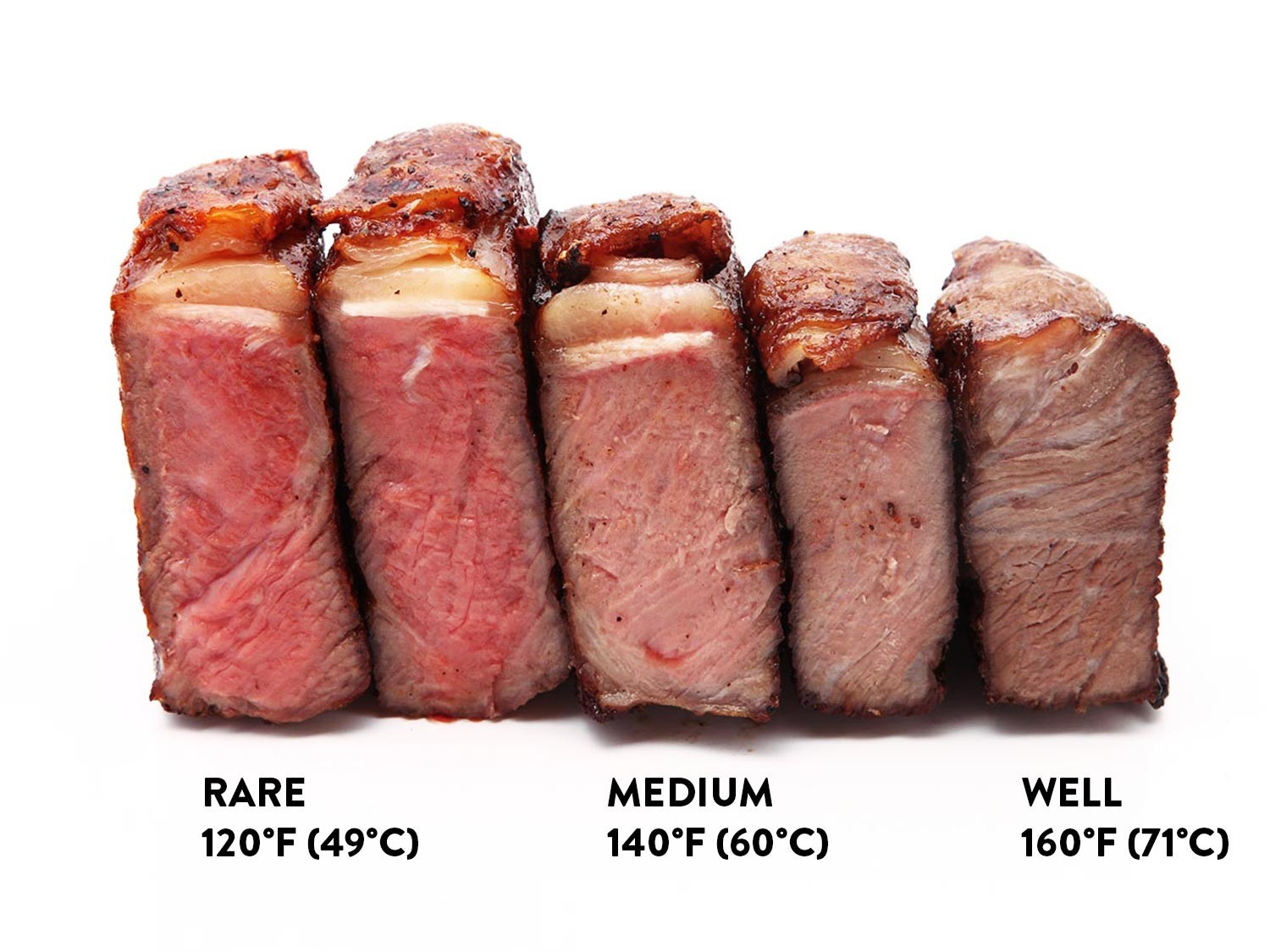
- Rare: The internal temperature of the steak is about 50-52°C (120-125°F). The juices are still visible in the center of the steak.
- Medium Rare: The internal temperature of the steak is about 57-60°C (135-140°F). The juices are still visible in the center, but the steak is slightly cooked around the edges.
- Medium: The internal temperature of the steak is about 63-68°C (145-155°F). The juices are less visible in the center, and the steak is pink in the center.
- Medium Well: The internal temperature of the steak is about 70-73°C (160-165°F). The juices are no longer visible in the center, and the steak is cooked through, but may still have some pink.
- Well Done: The internal temperature of the steak is between 76-82°C (170-180°F). The steak is cooked through, with no pink or moisture. It is important that these core temperatures are reached after resting. The internal temperature of the meat can rise by 2-3 degrees Celsius during resting, so it is worth considering this when grilling. Of course, the level of doneness you like to eat depends on the individual and your taste.
Seasoning is very important. Salt and pepper are enough for a good quality grilled steak.

There are several ways to cook steak. You can start cooking in an indirect zone and only sear the meat at the end, or you can do it the other way around. This also depends on the meat and your taste. The advantage of grilling steak is that the flavors of the open flame are also reflected in the final result.
Here are some types of meat that are popular ingredients for grilled steaks:
Tenderloin Steak
The most tender steak, although the “beef flavor” is less strong due to the low fat content. It is worth frying it in thick slices, especially for those who like their steak “rare” or medium. In America, it is not uncommon to fry slices 5 cm thick. English name: filet mignon, tenderloin Pork equivalent: sirloin
Beef Sirloin Steak (2-300 g)
A classic tender steak, prepared in different ways in different parts of the world: it can be fried with or without the bone, in thin and thick slices. It has a much more characteristic flavor than tenderloin. English name: strip steak, new york strip, kansas city steak, strip loin steak, sirloin steak Pork equivalent: short loin.
T-Bone Steak (6-800 g)
The T-Bone is a big favorite of Americans, which is nothing more than a tenderloin and a sirloin in one, including the T-shaped backbone with a bone. If the tenderloin part is larger than a golf ball, it is called a Porterhouse Steak. T-Bone is the best choice for those who have difficulty deciding between tenderness and a more characteristic taste. The structure of the bone determines the thickness of the slice, which is about 3 cm.
Ribeye Steak (6-700 g)
The most marbled part of the beef, making it particularly succulent and tender. Some say it is better than the tenderloin. We recommend it to those who are just starting to get acquainted with steaks. A perfect choice, and can even be enjoyed well done. It can be cooked with or without the bone. Pork equivalent: loin
Roasted Steak Compared to Ribeye, it is a fattier part, but many people don't know that it can also be used to make an excellent steak, and it is much cheaper than the above parts. English name: chuck steak Pork equivalent: rib.
Beef rump Steak
The first part of the beef rump is often called the black roast in Hungarian, the back half is called the white. Typically, we are talking about lean, dry meat that is suitable for steak.
